|
|
|
DARKER SKY Symposium
DARKER SKY — FINAL EVENT"Restoring Night condition for Biodiversity"Special Session 26 Tuesday 25th August, Pôle Numérique du Bouguen
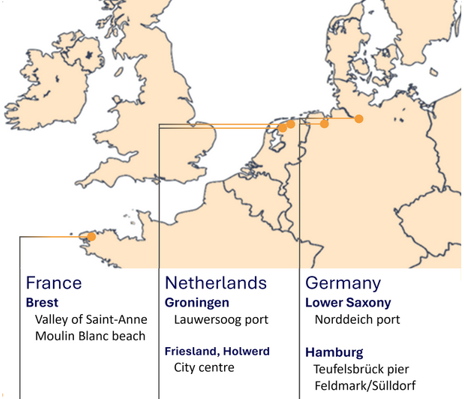
Led by the University of Brest, the DARKER SKY's project (2023-2026) brings together a partnership of ecologists, astronomers, light designers and urban planners representing universities, municipalities and ports. Co-funded by the Interreg North Sea programme, the aim of this interdisciplinary project is to reduce light pollution and increase biodiversity and ecological connectivity in the North Sea Region by supporting municipalities and ports in protecting nature through the implementation of light-reduction solutions. After the implementation of new ways of lighting at 7 demonstrator sites, DARKER SKY' final event will showcase best practices in terms of lighting that have been tested (biodiversity monitoring, light measurements, sky brightness measurements, sociological study) in order to reconcile wildlife protection with human needs.
A variety of deliverables and outputs will be presented, primarily aimed at decision-makers in the lighting sector, such as: Light Pollution Mapping and Monitoring Guide
7 Light-reduction solutions implemented and evaluated
Pilot Results Fact Sheets (non-technical)
Sky Brightness Map for selected North Sea Region areas
6 Regional Action Plans for the Roll-out of Light Reduction Solutions
Transnational Strategy to Reduce Light Pollution and Strengthen Dark Ecological Corridors
This event will be freely accessible, even to participants outside of the SERE2026 conference. In terms of ecological restoration, DARKER SKY's final event will address a topic that has not been widely studied until now: the restoration of the night. More information on the agenda to come soon... |